
What the New Nutrition Recommendations Really Mean for Athletes
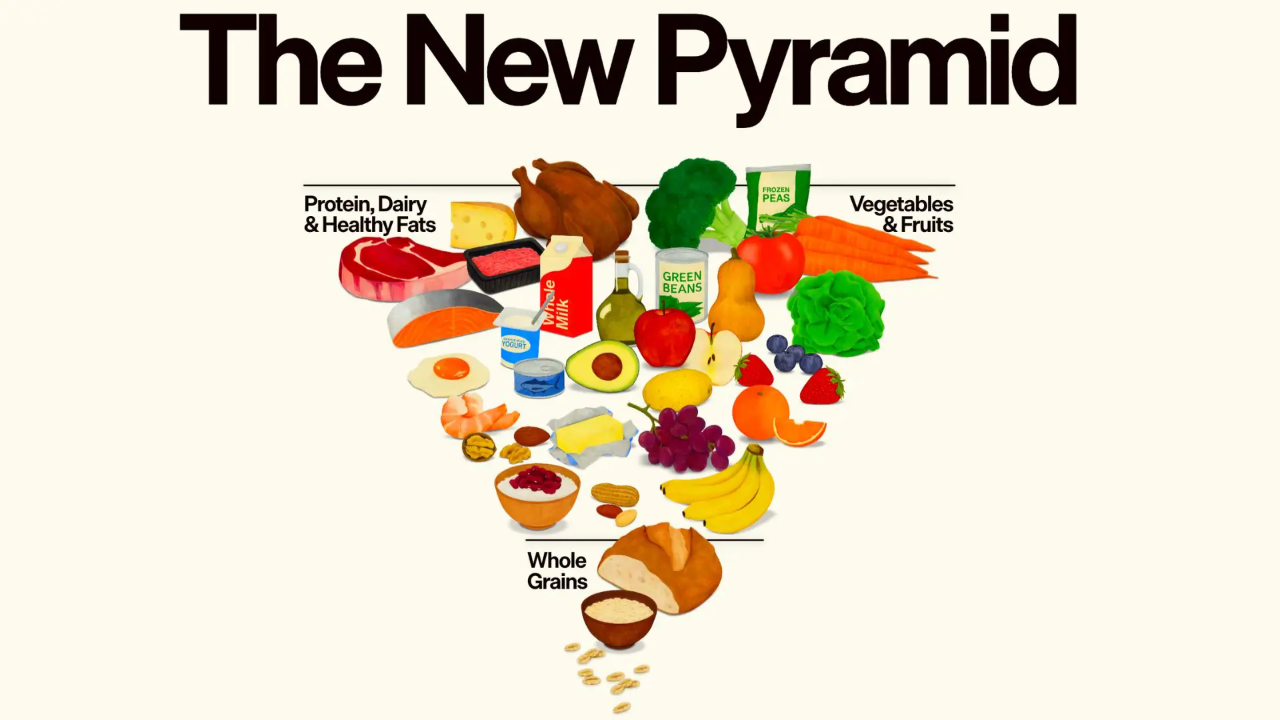
The newest nutrition recommendations have recently been launched. In my opinion is not too different than "MyPlate" (which was released in 2011). But there are some shifts that are worth mentioning. And there are some nuances that athletes should be mindful of.
The biggest shift is how we think about health (and in our case, performance). Rather than focusing narrowly on calories or single macronutrients, the guidelines now emphasize diet quality, food patterns, and lifestyle behaviors that support long-term health.
At their core, the new recommendations encourage:
-
Eating more whole, minimally processed foods
-
Reducing ultra-processed foods
-
Prioritizing plant diversity
-
Paying closer attention to hydration, sleep, and overall lifestyle factors
I will add that sports dietitians have been preaching these important pillars of health for years. But I guess it's nice to have it illustrated in an upside down pyramid?? The shift also acknowledges what research has made increasingly clear: how food is grown, prepared, and processed, combined, and how we live around that food, matters just as much as what’s technically "on your plate.” That awareness I can get behind.
How This Differs From “MyPlate” (What You Learned Growing Up)
Many of today’s high school athletes grew up learning nutrition through the MyPlate model. While MyPlate was a step forward from the old food pyramid, it still had limitations.
MyPlate focused primarily on:
-
Portion balance (½ plate fruits and vegetables, ¼ protein, ¼ grains)
-
Broad food groups with little discussion of food quality
-
Minimal guidance on processing, sleep, stress, or hydration
What it didn’t fully address was the difference between:
-
Whole foods vs. ultra-processed foods
-
Individual needs based on sport, training load, or body composition
-
Recovery factors like sleep, stress, and fueling timing
The new recommendations move beyond “just filling your plate correctly” and instead ask a better question:
Is this way of eating actually supporting how the body functions, adapts, and performs?
Why This Matters for Athletes
Athletes are not just smaller or younger versions of the general population, we have higher demands on our bodies. Training, competition, growth, academics, and stress all increase nutrient needs and recovery requirements.
That’s why applying the new recommendations through a sports nutrition lens is essential.
If I Designed the Nutrition Pyramid for Athletes
If it were up to me, I wouldn’t simply tweak MyPlate. I would redesign the entire framework to reflect how athletes actually perform best. Lets flip that pyramid back over - pre 2011!
Here’s how I’d build it.
1. The Foundation: Whole, Minimally Processed Foods
The base of the pyramid would be real foods, in their whole food form, minimally processed, and organic when possible. Food quality sets the stage for gut health, inflammation control, hormone balance, and recovery. Without this foundation, nothing else works optimally.
2. Hydration + Electrolytes (Individualized)
Next comes hydration, including electrolytes. This absolutely needs to be tailored to the individual athlete. Sweat rate, sport, environment, and training intensity all matter. Hydration isn’t one-size-fits-all, and even mild dehydration can impair performance and focus.
3. Sleep Hygiene + Stress Management + Recovery
Above hydration sits sleep and stress management. These are non-negotiable for recovery, growth, immune function, and mental performance. You can eat perfectly and still underperform if sleep and stress are ignored. Are you stretching? Using a Sauna? Foam rolling? Red lighting? All of these recovery tools are a crucial addition to a solid foundation of nutrient intake.
4. Supplements + Sunlight
Supplements and sunlight come next. Not as shortcuts, but as targeted tools. Supplements help fill gaps or support increased demands when food alone isn’t enough. Sunlight supports circadian rhythm, vitamin D status, and overall health. I'll also add that not every athlete should be taking supplements or even need supplements, and they definitely do not need the same supplements. This is an individualized pillar of health, wellness and performance as well.
5. The Top Layer: Peptides (When Appropriate)
At the very top would be peptides, used selectively and only when the foundational layers are solid. These advanced tools can support recovery, resilience, and longevity. They are never substitutes for nutrition, hydration, sleep, or stress balance.
The Big Takeaway
The newest nutrition recommendations are a step in the right direction, but athletes need more than general advice. They need a structured, realistic, individualized, performance-driven approach that reflects how their bodies actually work.
Fueling well isn’t about perfection. It’s about building strong foundations first, and then layering in smarter strategies over time.
